
Ridepay
Industry:Fintech / Mobility
My Role:Product Designer
Deliverables:Landing Page Design
Year:2024
Simplifying Transportation Payments
Ridepay is a digital payment solution designed to simplify public and private transport payments in Nigeria. With a simple 4-digit code, users can quickly pay for buses, taxis, and ride-hailing services without cash. The app removes the friction of queues, clunky interfaces, and manual payments, making everyday transportation seamless. Designed with a clean, intuitive interface, Ridepay ensures fast, reliable payments for both passengers and drivers across cities.
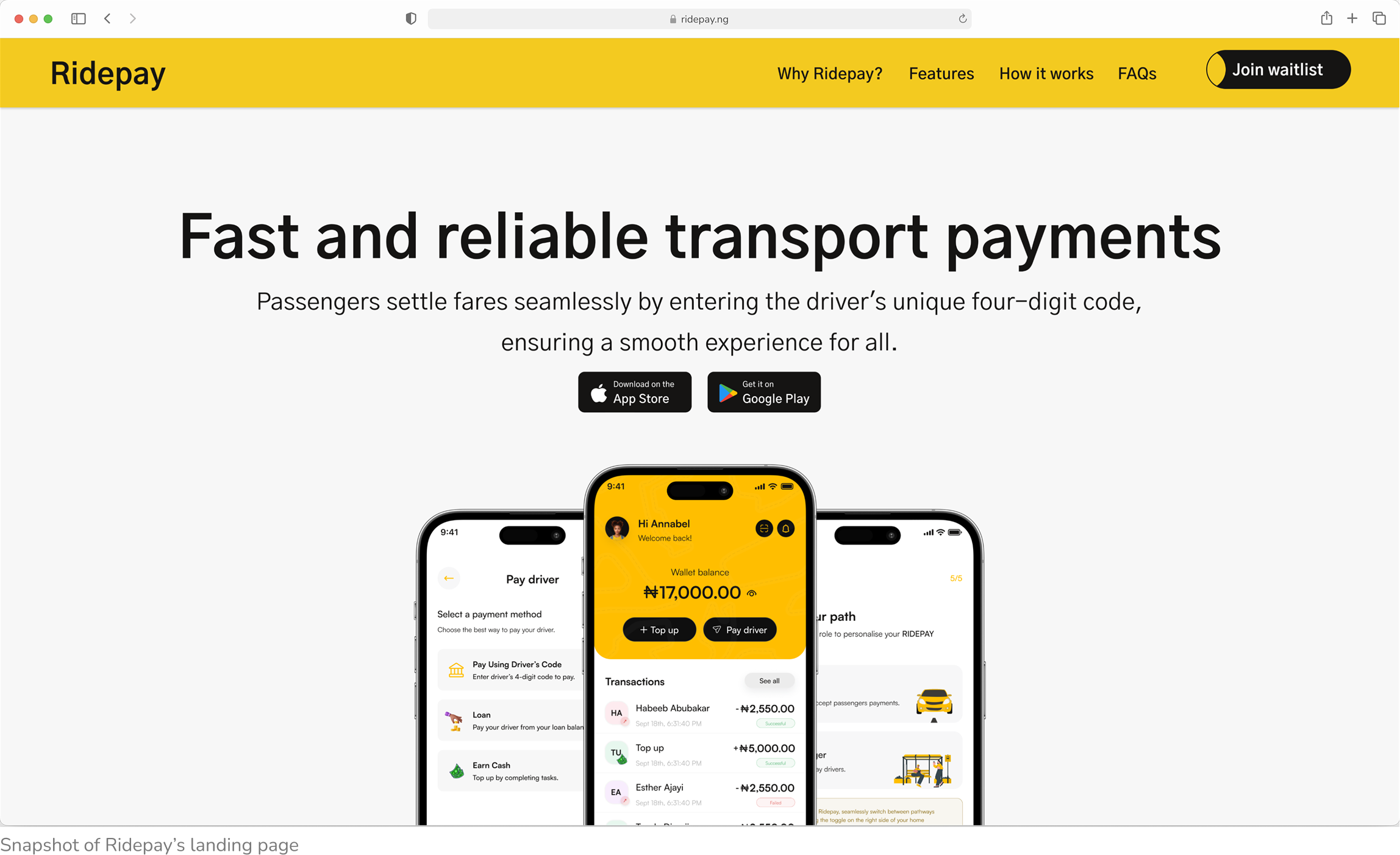
My Role
As the sole designer, I was responsible for the end-to-end design of the Ridepay landing page from research and content structure to visual design and developer collaboration.
The goal of the site was to onboard new users, build trust, and present the RidePay concept as simple, secure, and empowering.
My responsibilities included:
- User flow mapping
- UI design and prototyping
- Content and copywriting
- Developer handoff and collaboration.
The Problem
Despite the rise of mobile transfers, paying for transport is still a daily struggle for many Nigerians. Commuters either carry cash or rely on mobile wallets like OPay, Kuda, or Moniepoint, but even these options come with friction:
- Transfers take time, and often depend on network availability
- Some drivers prefer certain apps while others reject them entirely
- Traditional bank apps (like GTBank, First Bank) are even slower or unreliable on the go
For a system as fast-moving and informal as transport, these payment methods aren’t always practical. Commuters are often left negotiating, waiting, or jumping between apps just to complete a simple payment.
What’s missing is a frictionless, fast, and universally accepted way to pay whether it’s for a bus, taxi, or ride-hailing services like Bolt, Uber, or inDrive.
Research & Audience Understanding
To better understand how to design an intuitive and trustworthy landing page for Ridepay, I began by studying the realities of public transportation and digital payment adoption in Nigeria. This helped me define the tone, content, and structure that would resonate with the audience.
RidePay is designed for everyday commuters, people who regularly use uber, bolt, buses, and other options to get around. While many of these users are familiar with cash payments, they also frequently rely on mobile transfers through platforms like OPay, Moniepoint, Kuda, and traditional banks such as GTBank, Zenith, and others. However, despite this exposure to digital transactions, there’s still a level of hesitation when it comes to using new payment platforms, often due to concerns around scams, failed transactions, network issues, or poor usability.
Through light desk research and observation, I identified key motivators for this audience:
Speed
Simplicity
Reliability
These insights became a guide for how I shaped the overall user experience ensuring that the landing page felt clear, credible, and accessible to first-time users.

Strategy & Structure
To ensure the Ridepay landing page effectively communicated its value and guided users toward meaningful actions, I started by mapping out the core user journey from first visit to conversion. The strategy focused on building clarity, trust, and simplicity, especially for first-time users who may not be familiar with digital transport payments.
Ridepay’s unique selling point is that it enables payments across various transport options using just a 4-digit code. With this in mind, I structured the page to quickly answer three core questions for the user:
- What is Ridepay?
- How does it work?
- Why should I trust and use it?
With those questions in mind, I structured the landing page into
clear, scrollable sections
Focused Navigation
Focused Navigation
The page starts with a simple header featuring the Ridepay logo and a clear download CTA, with minimal navigation to keep focus on the core offering.
Bold, Benefit-Driven Tagline
Bold, Benefit-Driven Tagline
The hero section introduces Ridepay at a glance with a bold headline, brief sub-heading, and clear buttons prompting immediate downloads.
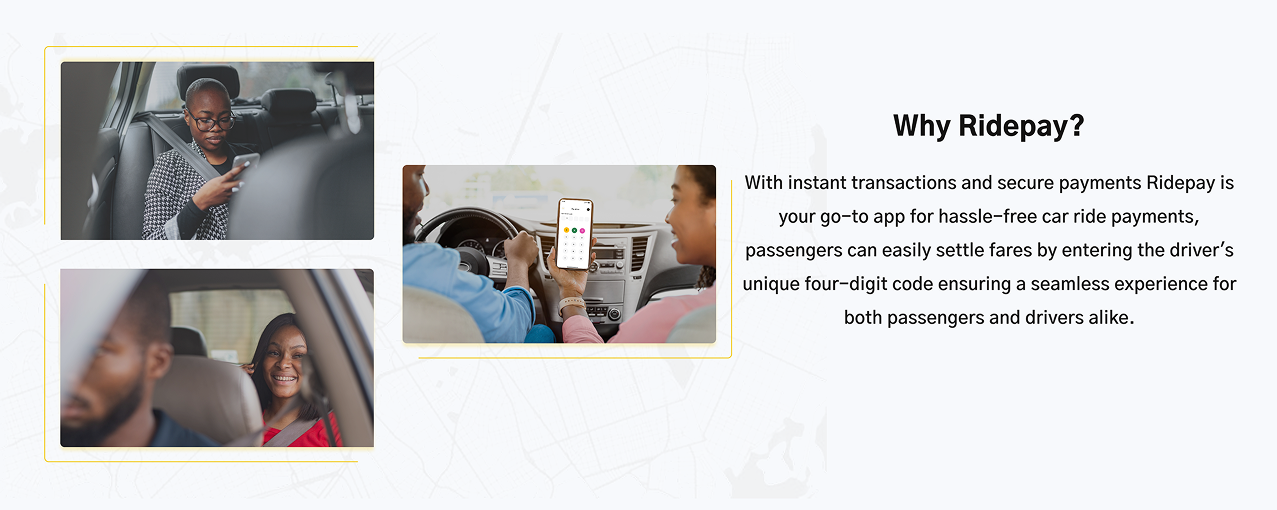
Clear Value Proposition
Clear Value Proposition
Right after the hero, a section highlights what makes Ridepay unique: simple, inclusive messaging that explains how users can pay for rides with just a 4-digit code.
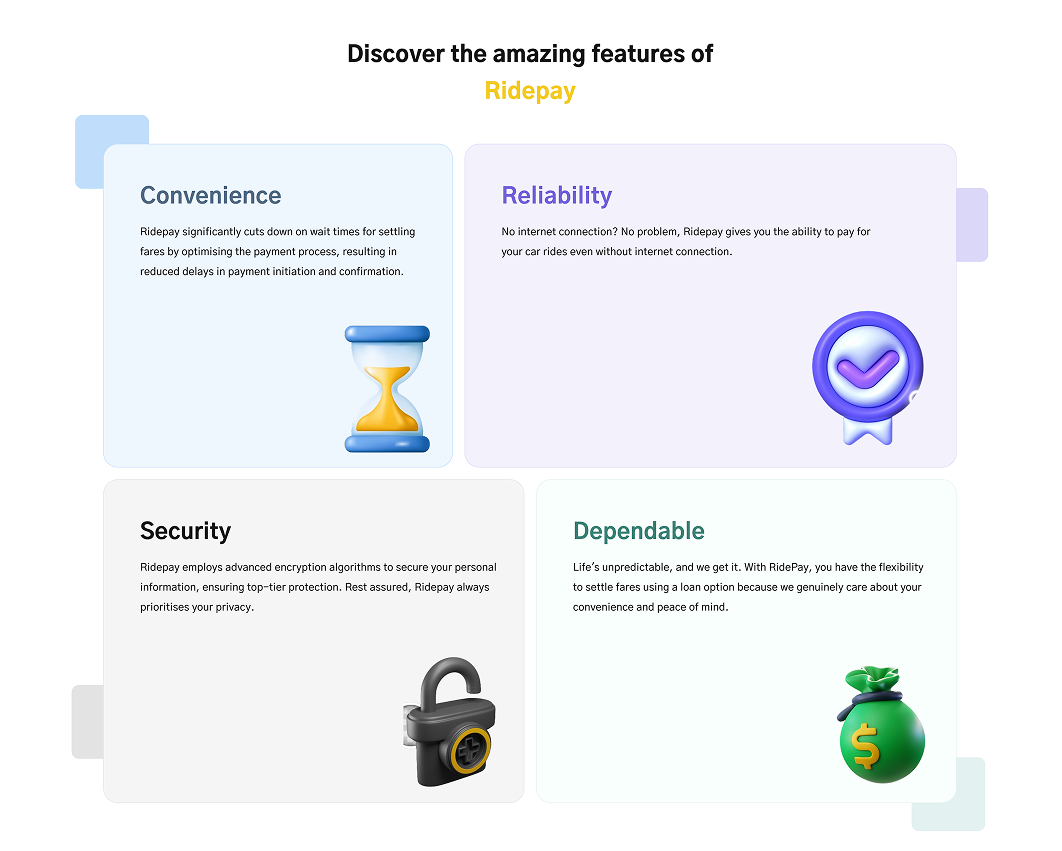
Highlighted Key Features
Highlighted Key Features
This section presents Ridepay's core strengths in a simple and clear layout. I highlighted four key attributes: convenience, reliability, security, and dependability.
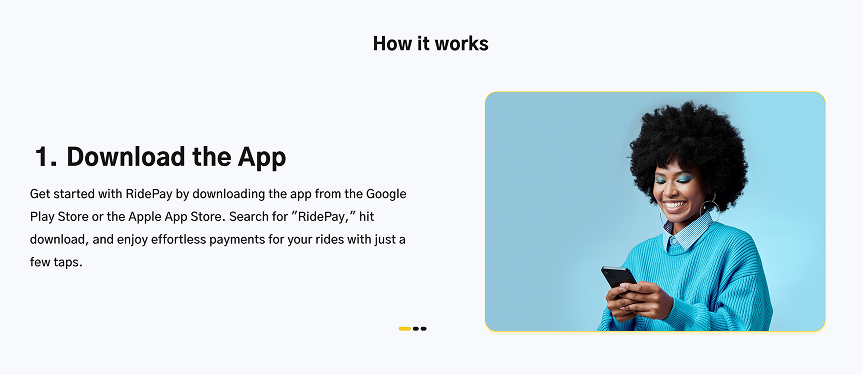
Simple User Walkthrough
Simple User Walkthrough
A step-by-step section guides users through using Ridepay: Download the app, enter the driver's code, and pay—making the process feel simple and accessible.
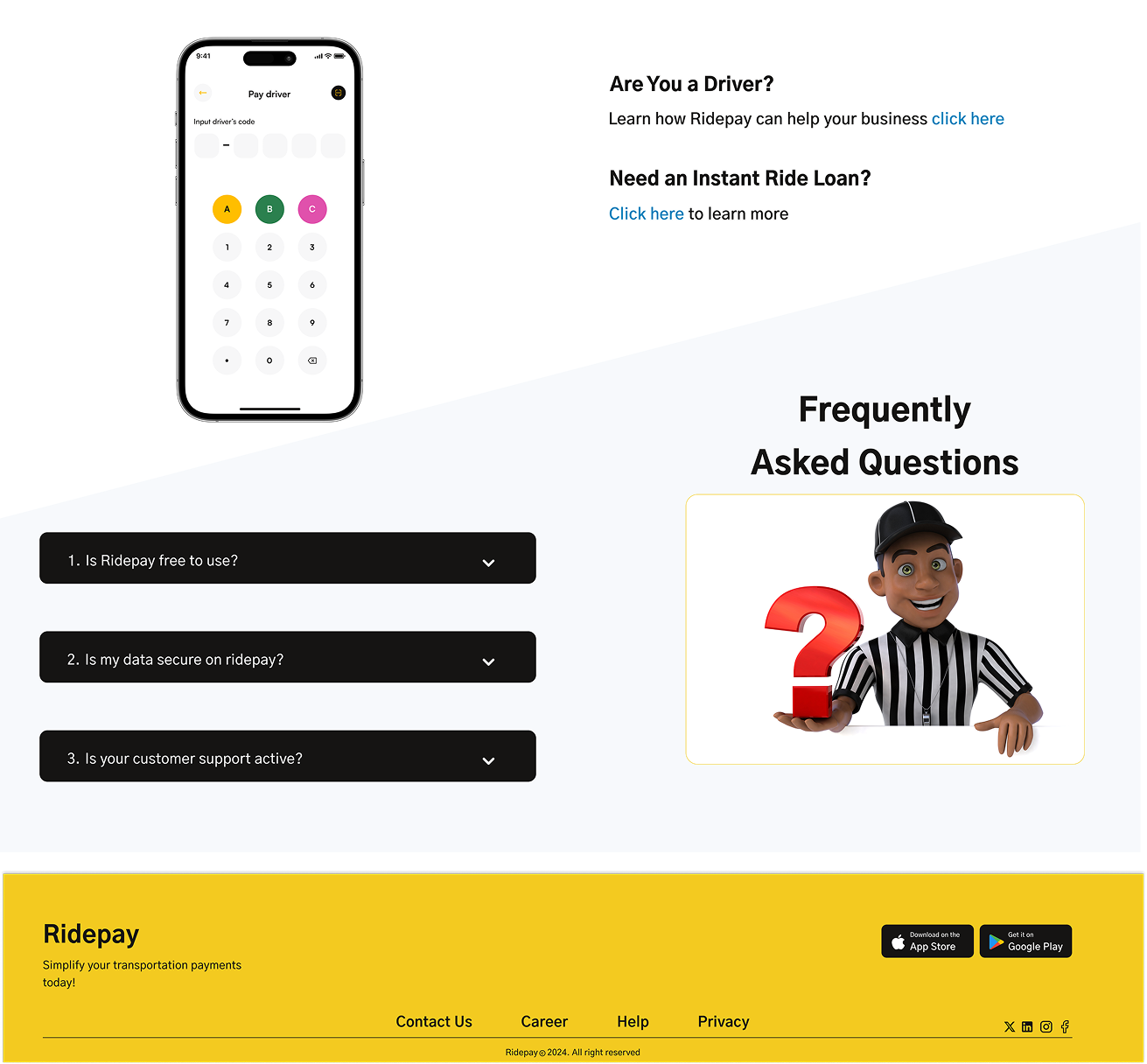
Multiple Conversion Opportunities
Multiple Conversion Opportunities
I placed multiple download buttons throughout the page to make taking action easy and seamless at any point.
Reassuring FAQs
Reassuring FAQs
To ease early doubts, I added a concise FAQ covering key concerns: cost, data security, and support. With clear, direct answers to boost trust.
Confident, Accessible Footer
Confident, Accessible Footer
The page ends with a clean footer featuring a final download prompt, support links, contact info, and social icons reinforcing trust.
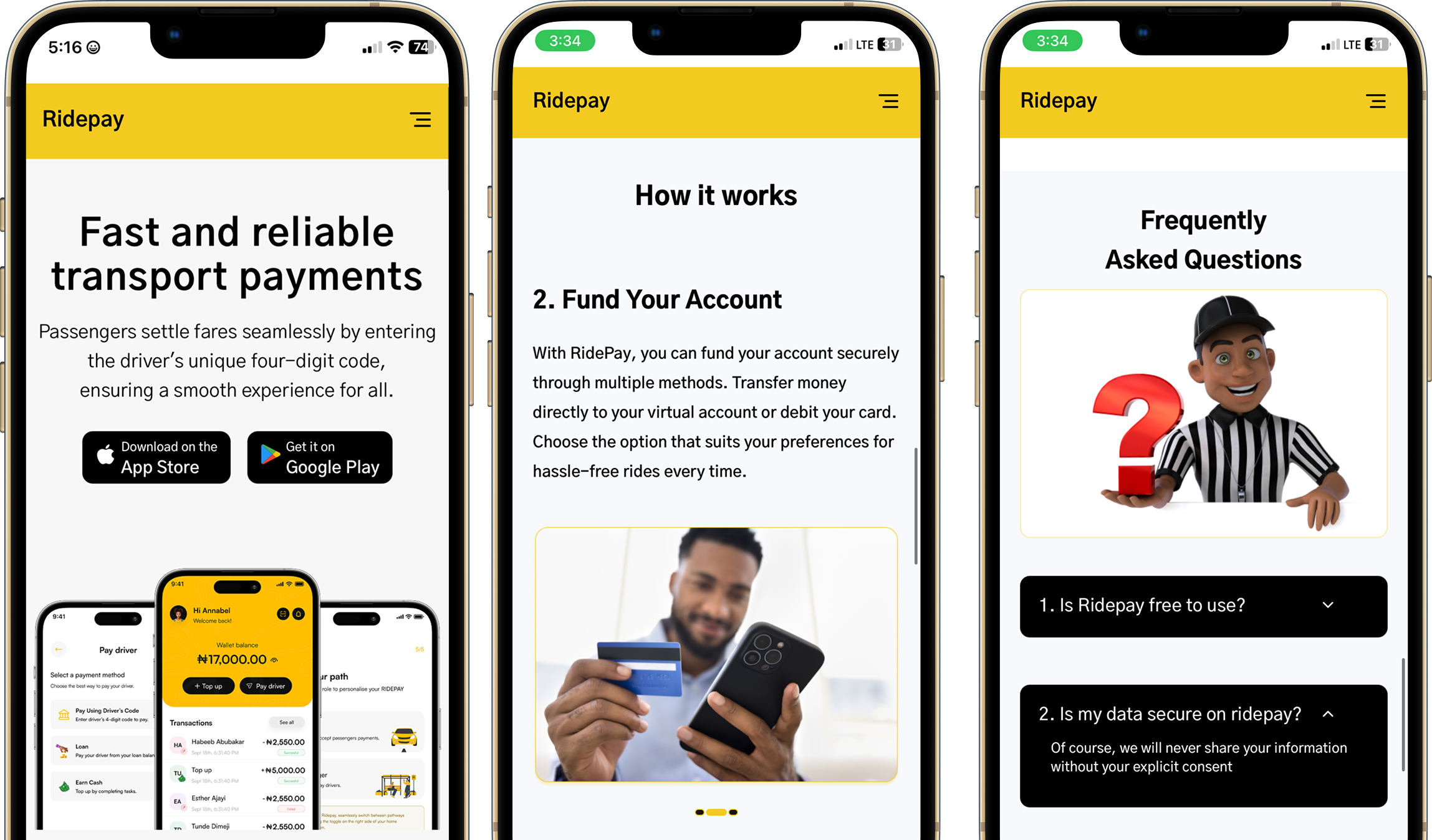
Mobile-First Design
Given Ridepay’s mobile-first audience, I prioritized a seamless phone experience using sticky CTAs, compact visuals, tappable cards, and smooth, fast-loading interactions for clarity and ease on any connection.
Results
Designing Ridepay’s landing page was focused not just on aesthetics, but on validation and growth. The goal was to clearly communicate the product’s value and drive early adoption through a seamless waitlist experience.
Following its launch in early 2024, the landing page achieved a 30% increase in waitlist sign-ups, signaling strong market interest and early traction. The simplified messaging and frictionless waitlist sign-up flow played a key role in converting visitors into early adopters.
The result was more than a successful launch, it validated product-market interest, built early anticipation for the mobile app release, and created momentum ahead of launch.
Key Takeaways
Here are two lessons that stood out to me during this project:
Trust and Clarity Come First: Building user trust was a top priority, especially given the fintech focus and target audience. The simplicity of the 4-digit code concept shaped both visual and content decisions, making the experience clear and approachable.
Collaboration Drives Quality: Collaborating with developers early on ensured design accuracy and responsiveness across devices, helping the final product stay true to the original vision.